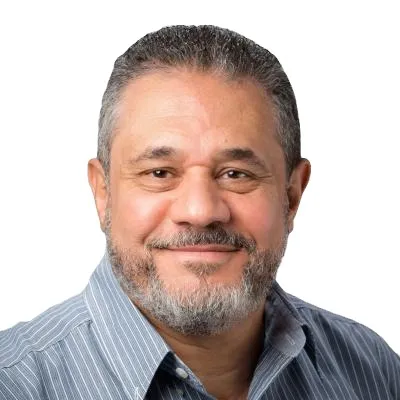
Course Instructor
Over 40 years of engineering practice and teaching. Dr. Mohamed Hamed's approach centers on bridging theory with real-world practical experience.
Ph.D. Mechanical Engineering
P.Eng. Ontario
FEC
Designers and operators of refrigeration systems and chiller plants must master key concepts, including the vapor compression cycle, component selection, capacity control, and system diagnostics. This course covers these fundamentals, along with refrigerant types, piping layout, safety considerations, and troubleshooting techniques.
Additionally, the course addresses operation and maintenance strategies for commercial and industrial chiller plants, with a focus on energy conservation and peak operating efficiency. Suitable for both beginners and experienced professionals, this course provides valuable insights across all experience levels.
Most refrigeration plants are not maintained. They are repaired. The distinction matters, because a plant that only gets attention when something fails has usually been running at a penalty for months that nobody measured.
Measurement before diagnosis. You cannot diagnose a plant you are not measuring. Superheat, subcooling and condenser approach temperature are the three numbers that say whether a system is still doing what it was designed to do, and most plants log none of them. The course covers what to measure, where, and what a drifting value actually means.
Diagnostics and troubleshooting. Low suction pressure has at least six plausible causes, from undercharge to a restricted metering device to a fouled evaporator. Working through them in the wrong order costs days. The course works through a diagnostic sequence that eliminates causes efficiently rather than by trial.
Chiller operation and maintenance. Condenser fouling is the most expensive maintenance item in most plants and the least visible. Approach temperature climbs a degree at a time, the compressor works harder for the same tonnage every hour it runs, and nothing announces it. Setting cleaning intervals from measured approach rather than from the calendar is the single change most plants can make.
Energy conservation at part load. Plants spend almost none of their life at design conditions. Head pressure control, compressor staging and condenser water temperature are where the operating cost is actually won or lost.
"Dr. Hamed's courses is a MUST FOR HVAC. TOP OF THE LINE."
"Very intensive course, lots of examples. Instructor: very knowledgeable."
"Fantastic instructor! Mastery of experience."
Yes. CANETCO offers custom delivery for organizations that want to train multiple staff members together. Contact us to discuss scheduling and group pricing.
Yes. If your organization has particular equipment, systems, or applications you want the course to focus on, we can tailor the content to address your specific requirements. Custom delivery is priced based on the scope of customization and the number of participants. Contact us to discuss your needs and we will develop a proposal that works for you.
The course covers the range of refrigerants in current use including HFCs, HFOs, and natural refrigerants, addressing properties, selection criteria, safety requirements, and the regulatory context around HFC phase-down under Canadian environmental regulations.
Yes. The course covers both commercial chiller plants used in buildings and industrial refrigeration systems used in food processing, pharmaceutical, and process applications - including the differences in configurations, refrigerants, and operational requirements.
All CANETCO courses are delivered live online via Zoom. Participants interact directly with the instructor and other attendees in real time, with workshops completed during the sessions.
Yes. This course is PEO PEAK compliant and the CPD hours count as formal core engineering learning toward your annual PEO PEAK continuing professional development requirement.
Both. Four of the ten modules are operations work: system and component measurement, diagnostics and servicing, chiller operation and maintenance, and energy conservation at peak operating efficiency. Maintenance and operations personnel are one of the four groups the course is written for.
Yes, and deliberately so. Most operating problems are inherited design decisions: a compressor selected without margin, piping that traps oil, a condenser sized for a cleaner site than the one it ended up on. Knowing why a plant behaves the way it does is what separates fixing a symptom from fixing a cause.
No. This is professional development for engineers and technologists, delivered live online and PEO PEAK compliant. It does not lead to a provincial power engineering certificate. If you already hold one, the course covers the design and efficiency side that operating certification does not.
Over 40 years of engineering practice and teaching. Dr. Mohamed Hamed's approach centers on bridging theory with real-world practical experience.
Invest in structured, expert-led training that advances both your technical skills and your professional credentials.