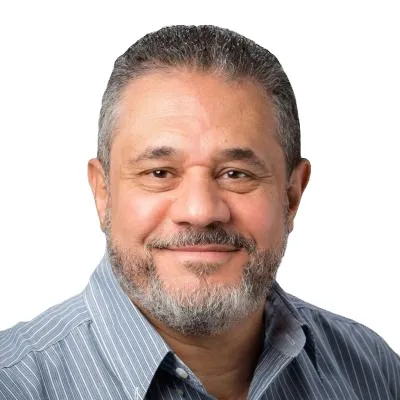
Course Instructor
Over 40 years of engineering practice and teaching. Dr. Mohamed Hamed's approach centers on bridging theory with real-world practical experience.
Ph.D. Mechanical Engineering
P.Eng. Ontario
FEC
Understanding Psychrometry is fundamental to grasping HVAC system operations, so the course begins with a concise review of Psychrometry and its application to air conditioning processes on the Psychrometric chart. Subsequently, participants will delve into detailed discussions on the basic subsystems of HVAC systems, covering various single-zone and multiple-zone configurations. Clear guidelines are provided for selecting the most suitable HVAC system for residential, commercial, and industrial applications.
Furthermore, the course addresses operation and maintenance procedures for different subsystems and components, alongside an overview of measurements and instrumentation utilized in troubleshooting HVAC systems.
This material caters to individuals with limited background knowledge on the subject, while also offering valuable insights for experienced personnel working with HVAC systems.
"Very informative and the instructor was very knowledgeable. I registered to better understand HVAC operation and troubleshooting. Best part: pretty well everything."
"Excellent course content. Working examples are very well structured and representative."
"Excellent combination of theory and practical. Very well presented course."
Yes. CANETCO offers custom delivery for organizations that want to train multiple staff members together. Contact us to discuss scheduling and group pricing.
Yes. If your organization has particular equipment, systems, or applications you want the course to focus on, we can tailor the content to address your specific requirements. Custom delivery is priced based on the scope of customization and the number of participants. Contact us to discuss your needs and we will develop a proposal that works for you.
This is an intermediate-level course for engineers and technologists with some HVAC background. It builds on fundamental knowledge and focuses on practical system selection, operation, maintenance, and troubleshooting.
Yes. Troubleshooting of HVAC systems is a dedicated module in this course, covering measurements, instrumentation, and systematic diagnostic methods using the psychrometric chart.
The Fundamentals course focuses on design methodology and sizing. This course focuses on system types for different applications, equipment selection, operation and maintenance procedures, and troubleshooting - building on fundamentals knowledge.
All CANETCO courses are delivered live online via Zoom. Participants interact directly with the instructor and other attendees in real time, with workshops completed during the sessions.
Yes. This course is PEO PEAK compliant and the CPD hours count as formal core engineering learning toward your annual PEO PEAK continuing professional development requirement.
Over 40 years of engineering practice and teaching. Dr. Mohamed Hamed's approach centers on bridging theory with real-world practical experience.
Invest in structured, expert-led training that advances both your technical skills and your professional credentials.