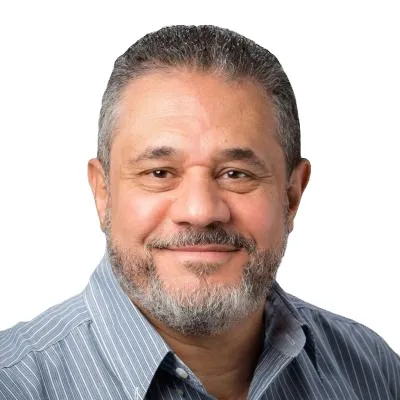
Course Instructor
Over 40 years of engineering practice and teaching. Dr. Mohamed Hamed's approach centers on bridging theory with real-world practical experience.
Ph.D. Mechanical Engineering
P.Eng. Ontario
FEC
Sustainable design requires collaboration between engineers, architects, owners, and facility managers to create high-quality, productive environments while considering environmental impacts. The LEED™ (Leadership in Energy & Environmental Design) rating system provides a way to quantify sustainability in building design.
This course introduces key concepts of sustainable design and operation of HVAC systems, covering various equipment and system options, guidelines for selecting systems based on application, and case studies to solidify understanding. This course caters to individuals with little background on the subject while providing valuable resources for more experienced personnel working with HVAC systems in buildings.
"Registered to find the best opportunities for optimization. Best part: methodical examples used in industrial plants."
"Very informative and Dr. Hamed was very knowledgeable and helpful."
"All materials were insightful and well presented."
Yes. CANETCO offers custom delivery for organizations that want to train multiple staff members together. Contact us to discuss scheduling and group pricing.
Yes. If your organization has particular equipment, systems, or applications you want the course to focus on, we can tailor the content to address your specific requirements. Custom delivery is priced based on the scope of customization and the number of participants. Contact us to discuss your needs and we will develop a proposal that works for you.
Studies consistently show that well-designed and properly commissioned HVAC systems with optimized controls use 20 to 40 percent less energy than conventionally designed systems. The course covers the specific design decisions that produce these results.
Yes. LEED energy credits are earned by demonstrating energy performance that exceeds the ASHRAE 90.1 baseline. The course covers the sustainable design strategies - heat recovery, variable flow systems, controls optimization - that produce the performance improvements needed to earn those credits.
All CANETCO courses are delivered live online via Zoom. Participants interact directly with the instructor and other attendees in real time, with workshops completed during the sessions.
Yes. This course is PEO PEAK compliant and the CPD hours count as formal core engineering learning toward your annual PEO PEAK continuing professional development requirement.
Over 40 years of engineering practice and teaching. Dr. Mohamed Hamed's approach centers on bridging theory with real-world practical experience.
Invest in structured, expert-led training that advances both your technical skills and your professional credentials.