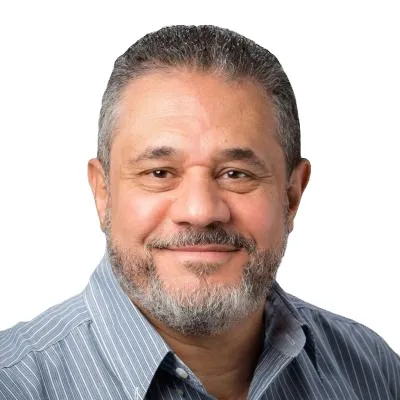
Course Instructor
Over 40 years of engineering practice and teaching. Dr. Mohamed Hamed's approach centers on bridging theory with real-world practical experience.
Ph.D. Mechanical Engineering
P.Eng. Ontario
FEC
Success in solving problems, improving processes, and troubleshooting faults often hinges on the ability to select proper system components and perform accurate design and sizing calculations. This course introduces essential concepts in thermodynamics and fluid mechanics, providing the foundational knowledge needed to design piping systems for gases, liquids, and slurries.
The course material is designed for individuals with little background in the subject but also offers valuable insights for experienced professionals in piping system design.
"Very good - illustrative - industrial examples supported by detailed calculations."
"The quality of the course was knowledgeable with intellectual approaches."
"Appreciated how he made sure you understood before moving on."
Yes. CANETCO offers custom delivery for organizations that want to train multiple staff members together. Contact us to discuss scheduling and group pricing.
Yes. If your organization has particular equipment, systems, or applications you want the course to focus on, we can tailor the content to address your specific requirements. Custom delivery is priced based on the scope of customization and the number of participants. Contact us to discuss your needs and we will develop a proposal that works for you.
The course covers steam piping, compressed air piping, fuel gas piping, water and hydronic piping, oil piping, and slurry and sludge piping - each with the specific design considerations for that fluid type.
Pipe sizing involves selecting an appropriate flow velocity for the fluid type, calculating the required diameter, and then verifying that the pressure drop through the system is within acceptable limits. The course covers both the equal friction method and velocity-based methods with practical workshops.
All CANETCO courses are delivered live online via Zoom. Participants interact directly with the instructor and other attendees in real time, with workshops completed during the sessions.
Yes. This course is PEO PEAK compliant and the CPD hours count as formal core engineering learning toward your annual PEO PEAK continuing professional development requirement.
Over 40 years of engineering practice and teaching. Dr. Mohamed Hamed's approach centers on bridging theory with real-world practical experience.
Invest in structured, expert-led training that advances both your technical skills and your professional credentials.